How to Grow Your Roblox Game in 2026: The Complete Growth Playbook
A step-by-step guide to growing your Roblox game from zero to thousands of daily active players. Covers discovery, retention, monetization, and marketing strategies.
Sametcan Tasgiran
Founder & Developer at BloxMetrics
TL;DR: Growing a Roblox game follows a 6-phase framework: fix retention first (if D1 is below 8%, stop marketing), optimize for Roblox's algorithm (session time, retention, engagement), build community, maintain weekly update cadence, implement monetization, and measure everything. Expect 1-2 months for retention fixes, 3-4 months before marketing pays off, and 6-12 months for compound algorithmic growth.
Why Most Roblox Games Never Grow
There are millions of games on Roblox. Most of them have zero concurrent players. The difference between a dead game and a growing one usually comes down to three things:
- 1Retention — Do players come back after their first visit?
- 2Discovery — Can new players find your game?
- 3Monetization — Can you sustain development with revenue?
If you nail retention first, everything else becomes easier. A game that retains players will naturally grow through Roblox's algorithm. A game that doesn't retain will waste every marketing dollar you spend.
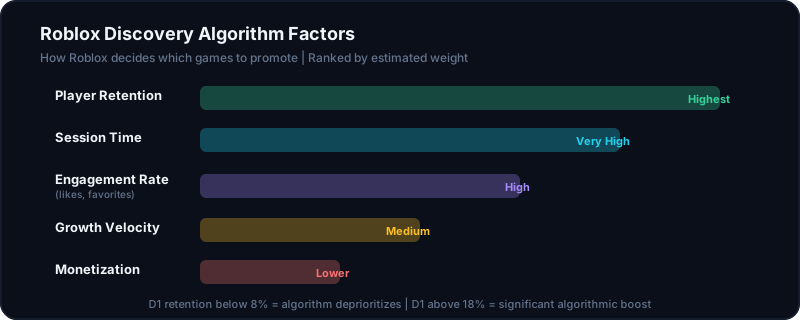
Growing a Roblox game in 2026 follows a proven six-phase framework: fix retention, optimize for discovery, build community, maintain update cadence, implement monetization, and measure everything. The most critical principle is that retention must come before marketing — if your D1 retention is below 8%, every dollar spent on ads or promotion is wasted because players will leave and never return. Roblox's algorithm promotes games based on session time, retention rates, engagement (likes and favorites), growth velocity, and monetization metrics. For Sponsored Experiences, a good Cost Per Play (CPP) benchmark is $0.02-0.05, but ads should only run after retention is solid. Games that update weekly or bi-weekly receive significant algorithmic boost. The typical growth timeline is 1-2 months for retention optimization, 3-4 months to start marketing, and 6-12 months for compound growth as the algorithm picks up the game.
Phase 1: Fix Retention Before Anything Else
This is the most common mistake: developers try to get more players before their game is ready to keep them. If your D1 retention is below 8%, stop marketing and fix your game first.
The Retention Checklist
- First 30 seconds: Player knows exactly what to do
- First 2 minutes: Player gets their first reward/achievement
- First 5 minutes: Player understands the core gameplay loop
- First session: Player sees what they'll unlock in future sessions
- Before leaving: Player has a reason to return tomorrow
How to Diagnose Retention Issues
You need analytics. Without data, you're guessing. Tools like BloxMetrics show you exactly where players drop off:
- At what point in the first session do most players leave?
- Which tutorial step loses the most players?
- Do mobile players retain differently than desktop players?
- What's your retention by country and server region?
Fix the biggest drop-off point first, then move to the next one.
Phase 2: Optimize for Roblox Discovery
Roblox's algorithm determines which games appear on the home page, in search results, and in recommendations. Here's how it works:
The Algorithm Factors
- 1Session time — Games where players spend more time get promoted
- 2Retention — Games with high D1/D7 retention get more visibility
- 3Engagement rate — High like ratios and favorites boost ranking
- 4Growth velocity — Games that are growing faster get algorithmic boost
- 5Monetization — Games that generate revenue get additional promotion
Search Optimization (Roblox SEO)
Your game's title, description, and tags determine where you appear in Roblox search:
- Title: Include your main keyword naturally. "Dragon Tycoon" is better than "xX_MyGame_Xx"
- Description: Write a compelling description with relevant keywords in the first 2 lines
- Tags: Use all available tags. Include genre, mechanics, and theme tags
- Icon & Thumbnails: High-quality, eye-catching visuals dramatically improve click-through rates
[Sponsored Experiences](https://create.roblox.com/docs/production/promotion/ads-manager)
Roblox's ad system lets you promote your game directly:
- Start with a small budget ($10-25/day) to test
- Target by age group and device
- Measure Cost Per Play (CPP) — good CPP is $0.02-0.05
- Only run ads AFTER your retention is good — otherwise you're paying to show players a game they'll never return to
Phase 3: Build a Community
Games with communities grow organically and sustainably.
Discord Server
Every successful Roblox game has a Discord server. Use it for:
- Announcements and update previews
- Bug reports and feedback
- Community events and competitions
- Building hype before updates
Social Media
- YouTube: Development logs, update trailers, gameplay tips
- TikTok: Short clips of gameplay, funny moments
- Twitter/X: Developer updates, community engagement
In-Game Social Features
- Group/clan systems
- Trading
- In-game chat
- Collaborative challenges
- Leaderboards and competitions
Phase 4: Update Cadence
Roblox games that update regularly grow; games that stagnate die. The algorithm rewards fresh content.
Recommended Update Schedule
- Weekly: Small fixes, balance changes, minor content
- Bi-weekly: New features, events, or content drops
- Monthly: Major updates with new mechanics or areas
- Quarterly: Seasonal events, large content expansions
What to Update
Use your analytics to decide:
- Low retention? Fix onboarding and early game experience
- Players leaving at a specific point? Add content or fix that area
- Low monetization? Adjust pricing or add new items
- Engagement dropping? Launch an event or new feature
Phase 5: Monetization That Fuels Growth
Revenue lets you invest more in your game, which drives more growth.
The Revenue Flywheel
- 1Good game → Players stay → Some players pay
- 2Revenue → Better updates → More players stay
- 3More players → More revenue → Even better updates
- 4Repeat
Quick Monetization Wins
- VIP Game Pass ($199-499 Robux): Status, cosmetics, quality-of-life perks
- 2x Coins Game Pass ($99-199 Robux): Most popular pass type on Roblox
- Currency Packs (Developer Products): R$49, R$199, R$499, R$999 tiers
- Season/Battle Pass: Recurring revenue from engaged players
Phase 6: Measure Everything
You can't grow what you don't measure. At minimum, track:
- DAU (Daily Active Users) — Is your player base growing?
- D1/D7/D30 Retention — Are players staying?
- Session Length — Are sessions getting longer or shorter?
- ARPPU — Are paying players spending more or less?
- Payer Conversion — What percentage of players make a purchase?
- Source of Players — Where are new players coming from?
BloxMetrics tracks all of these metrics automatically with a 2-minute SDK setup. Plus, AI insights tell you exactly what to focus on each week for maximum growth.
The Growth Timeline
Be realistic about timelines:
- Month 1-2: Fix retention, set up analytics, polish first-time experience
- Month 3-4: Start marketing (sponsored experiences, social media)
- Month 5-6: Community building, consistent update cadence
- Month 6-12: Compound growth as algorithm picks up your game
- Year 2+: Scaling with revenue, team building, new features
Key Takeaways
- Fix retention before marketing — No point driving traffic to a leaky bucket
- Let data guide your decisions — Use analytics to find and fix problems
- Update consistently — The algorithm rewards active development
- Build community — Organic growth from word-of-mouth is the best growth
- Be patient — Real growth takes months, not days
Track your Roblox game metrics today
Set up BloxMetrics in 2 minutes. Get retention, revenue, and player analytics — free.
Start Free